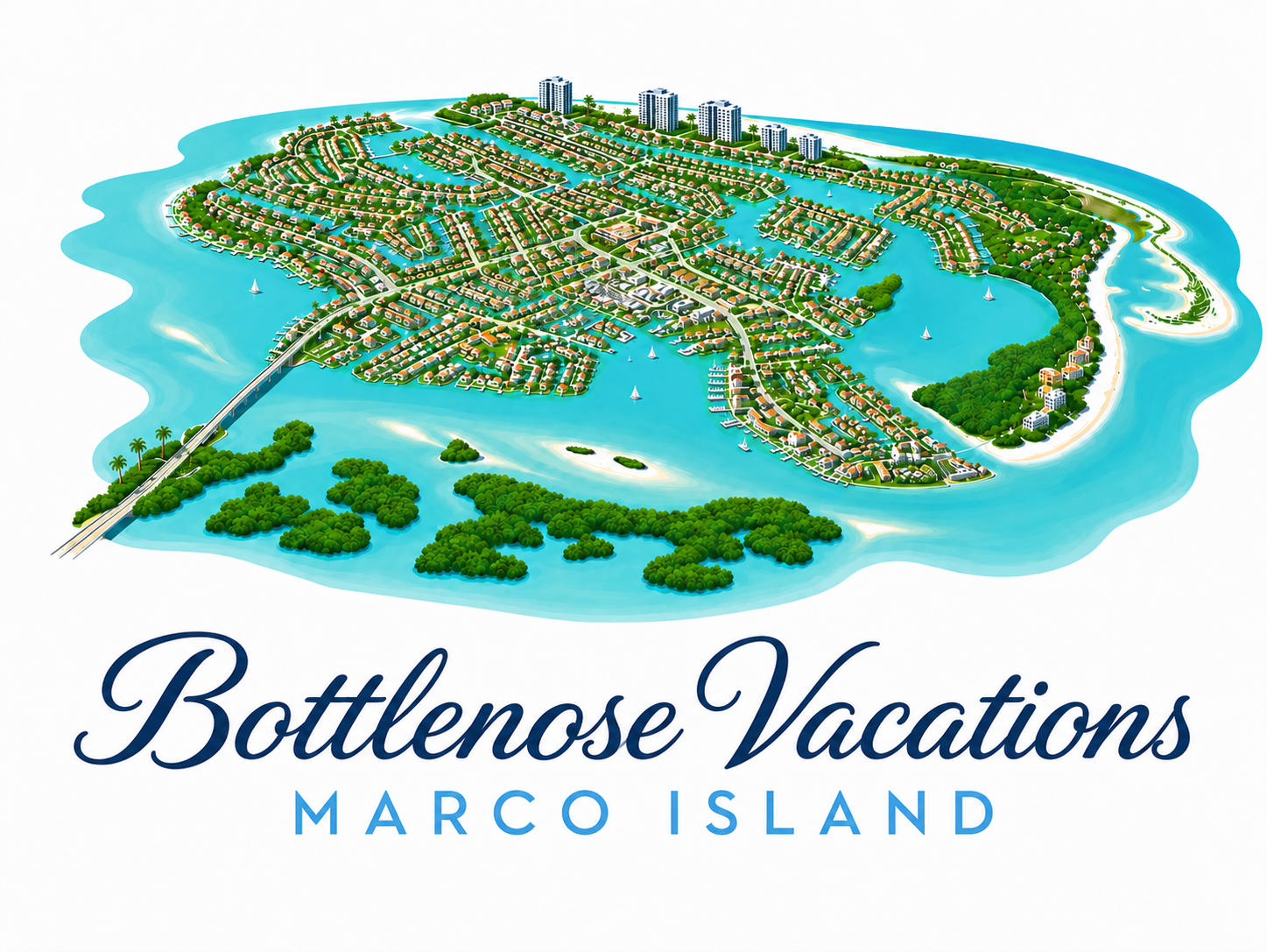
Marco Island, Florida — The Complete Visitor's Guide
Marco Island is one of Florida's most beloved vacation destinations — a genuine island escape that manages to feel both world-class and genuinely unhurried. Whether you're visiting for the first time or the fifteenth, this guide covers everything you need to know about Marco Island, from its fascinating history and remarkable geography to the best time to visit and how to get there.
History of Marco Island
Marco Island's human history stretches back more than 2,000 years. The island was home to the Calusa people, a sophisticated Native American civilization that thrived in Southwest Florida for centuries before European contact. The Calusa were not farmers — they were fishermen and shellfish harvesters of extraordinary skill, building complex shell mound communities throughout what is now the Ten Thousand Islands region. The most significant surviving evidence of their civilization on Marco Island is the Key Marco site, excavated in 1896 by the Smithsonian Institution, which yielded one of the most important collections of pre-Columbian wooden artifacts ever found in North America — including the famous Key Marco Cat, a small carved wooden figure of a crouching feline-human figure that is now considered a masterwork of indigenous American art.
After the collapse of the Calusa civilization following Spanish contact in the 16th and 17th centuries, Marco Island remained largely uninhabited for nearly two centuries, used primarily by fishing families and seasonal visitors from the mainland. The island's modern identity began to take shape in the early 20th century with the establishment of a small but vibrant fishing and clamming community in what is now Olde Marco — the same neighborhood where Bottlenose Pointe is located. The original Marco Lodge, built on the waterfront in 1883, was the island's first permanent commercial structure and served as a gathering place for the fishing community for generations.
The transformation of Marco Island into the destination it is today began in the 1960s with the arrival of the Mackle Brothers, a prominent Florida development company that saw the potential of the island's extraordinary geography and mild climate. The Mackle Brothers launched one of the largest planned community developments in Florida history, dredging canals, building roads, constructing seawalls, and marketing the island to buyers across the northeastern United States. Their vision — a waterfront community accessible to middle-class American families — permanently shaped the island's residential landscape. The Mackle Brothers' development is why Marco Island today has more than 100 miles of navigable canals, giving an extraordinary proportion of its homes direct waterfront access.
Geography & Natural Setting
Marco Island is the largest and northernmost of Florida's Ten Thousand Islands — a vast subtropical archipelago of mangrove islands, tidal creeks, oyster bars, and open bays stretching from Marco Island south to the Flamingo area of Everglades National Park. The island measures roughly 6 miles long and 4 miles wide, covering approximately 24 square miles of land, with the Gulf of Mexico forming its western and southern shores and the Marco River forming its eastern boundary.
The island's western Gulf coast is characterized by the wide, white quartz sand beaches that Marco Island is famous for — the same geological belt of shell-ground sand that makes Sanibel and Captiva Islands world-famous shelling destinations. The eastern and northern shores of the island, including the Olde Marco waterfront where Bottlenose Pointe is located, face the Marco River and the sheltered backcountry bays of the Ten Thousand Islands. This dual-water access — Gulf beaches on one side, protected river and backcountry on the other — is one of the defining characteristics of Marco Island and one of the reasons it offers such a varied range of water activities within a very small geographic area.
Immediately south and east of Marco Island lies the northern extent of Everglades National Park and the Ten Thousand Islands National Wildlife Refuge, protecting hundreds of thousands of acres of pristine mangrove wilderness, seagrass meadows, and coastal marine habitat. Marco Island's proximity to this protected wilderness is one of its greatest assets — it means the island is surrounded by extraordinarily clean, clear water with exceptional marine biodiversity, and that the development pressures that have compromised so much of Florida's coastline cannot advance further south.
Climate & Best Time to Visit
Marco Island has a subtropical climate with two distinct seasons: a warm, dry winter season (November–April) and a hot, humid summer season (May–October) with frequent afternoon thunderstorms. For most visitors, the dry season is overwhelmingly preferred — and Marco Island's winter weather is genuinely exceptional by any standard.
November–December
65–78°F
Ideal. Low humidity, warm days, cool evenings. Light crowds early November.
January–February
62–76°F
Peak season. Perfect weather, busy with snowbirds. Book well in advance.
March–April
68–82°F
Excellent. Spring break brings crowds in March; April is quieter and beautiful.
May
76–88°F
Warm, low humidity still. Crowds drop, rates fall. Underrated month to visit.
June–August
82–92°F
Hot and humid with daily afternoon storms. Low rates; local feel.
September–October
78–88°F
Hurricane season; storms possible. Rates very low, island very quiet.
How to Get to Marco Island
Marco Island is accessible only by road — there is no ferry service or commercial airport on the island itself, though the small Marco Island Executive Airport handles private aviation. The nearest major commercial airports are Fort Myers (RSW, 47 miles / approximately 55 minutes), Naples (APF, 26 miles / approximately 35 minutes), and Miami (MIA, 115 miles / approximately 2 hours). Southwest Florida International Airport in Fort Myers is the most commonly used gateway, with direct flights from most major U.S. cities. For travelers from the Northeast and Midwest, direct flights to RSW are widely available throughout the peak season.
By car, Marco Island is reached via Collier Boulevard (CR-951) from the north, which connects to I-75 at Exit 101 near Naples. From Fort Myers and points north, the drive follows I-75 south to Exit 101, then Collier Boulevard south approximately 20 miles to the island. From Miami, the most direct route is either US-41 (Tamiami Trail) across the Everglades or I-75 (Alligator Alley) to Fort Myers, then south on Collier Boulevard. The Tamiami Trail drive through the Everglades is one of the most scenic highways in Florida and a worthwhile experience in itself.
Once on the island, a car is essential for most activities — Marco Island has no public transit system, and while Olde Marco is very walkable, reaching the Gulf beaches, golf courses, and most shopping requires a short drive. Rideshare services operate on the island, and bicycle rentals are available for guests who want to explore the island's flat, well-maintained roads on two wheels.
Marco Island vs. Other Florida Destinations
Marco Island occupies a unique position in the Florida vacation landscape — quieter and more residential than Miami, more authentically local than Naples, more developed and accessible than the remote Keys communities, and with far better beaches and wildlife than Orlando. It is the kind of destination that guests discover and then return to, often for decades, because it strikes the rare balance between true natural beauty and genuine creature comforts.
Unlike Miami or Fort Lauderdale, Marco Island has no nightclub scene, no gridlock, and very little of the overcrowded-tourist-destination atmosphere that many travelers find exhausting. Unlike the Florida Panhandle's beach communities, Marco Island has the distinct subtropical character of South Florida — warmer water, more exotic wildlife, lush tropical vegetation, and a culture shaped by proximity to the Everglades and the Caribbean. And unlike the interior theme park belt of Central Florida, Marco Island's appeal is entirely rooted in genuine natural beauty rather than manufactured entertainment.
The island's shelling is world-class — the same Gulf Coast shell belt that makes Sanibel legendary extends south through Marco Island's beaches, and the remote sandbars of Tigertail Beach regularly yield shells that would be remarkable finds anywhere else in the country. The fishing is extraordinary — the combination of Gulf, river, and backcountry habitats creates one of the most productive fishing environments on the East Coast. And the wildlife — bald eagles, bottlenose dolphins, manatees, roseate spoonbills, sea turtles — reaches densities that genuinely surprise first-time visitors from outside Florida.
Start Your Marco Island Story at Bottlenose Pointe
Bottlenose Pointe gives guests the ideal base for experiencing everything Marco Island has to offer — a private riverfront condo in the heart of Olde Marco, steps from the island's best restaurants and the Marco River waterfront. Book direct with the owners for the best rate, personal service, and no OTA fees.
Check Availability & Book Direct